Change Management Training – Melbourne, Perth & Australia-wide


Organisations today face constant shifts in customer expectations, technology, and strategic priorities. The ability to respond quickly — and with committed people — is now a core competitive advantage. As your teams learn to adapt, embed, and sustain new ways of working, effective change management becomes essential.

HiLogic’s Leading Change Foundations and Foundations Plus programs equip individuals and teams with the practical tools, human centred methods, and confidence needed to lead successful change across any environment.

Why Build Change Management Capability?

Equipping staff with change management know how helps organisations:

  • Respond faster to customer and market trends
  • Assess the impacts, risks, and challenges of change more effectively
  • Identify benefits that motivate people toward the end goal
  • Reduce the time required to implement change
  • Increase return on investment by reducing costs and maximising business value
  • Reduce the likelihood of unsuccessful or stalled change initiatives
  • Strengthen change leadership and build high performing teams
  • Improve stakeholder engagement and project outcomes.

HiLogic’s Leading Change Training Programs

HiLogic’s programs focus on both the human and organisational sides of change—helping participants understand context, shape change with stakeholders, and activate new behaviours that stick.

What Participants will learn

By the end of the program, participants will be able to:

  • Recognise common change pitfalls and assess organisational readiness
  • Identify key change roles and attributes of high performing change teams
  • Analyse how organisational context shapes change strategies
  • Understand the influence of human dynamics on change success
  • Apply techniques to assess and map change impacts
  • Evaluate the limitations of widely used change models
  • Design and adapt change plans for diverse environments
  • Select meaningful metrics to track progress and success.

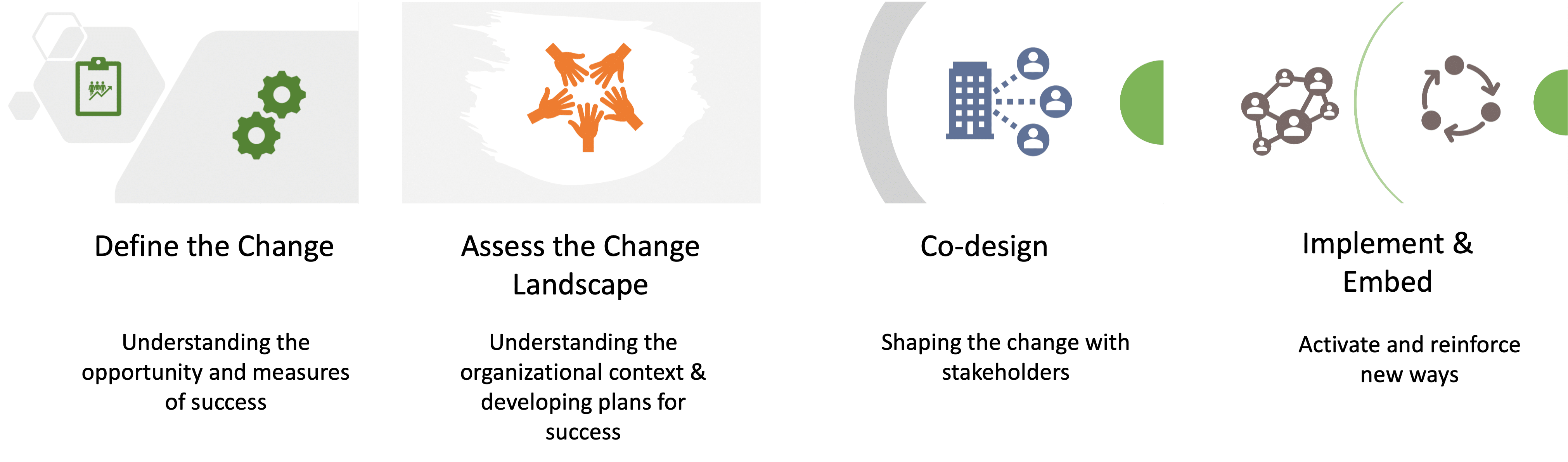
The program explores the full Change Pathway, including:

  • Define the Change – understanding the opportunity and measures of success
  • Assess the Change Landscape – analysing context and developing plans
  • Co design – shaping change with stakeholders
  • Implement & Embed – activating and reinforcing new ways of working.

Change Management


A practical, scenario based 2-day program using a purpose built HiLogic case study. Participants explore key concepts, apply proven techniques, and build confidence in leading and supporting change.

An immersive 3-day program integrating your organisation’s real change initiatives. Participants apply models and tools directly to their own scenarios, supported by coaching, reflection, and guided practice.

This training is ideal for:

  • Aspiring or current change managers and agents of change
  • Project and program managers
  • Business leaders responsible for driving or sponsoring change
  • HR, communications, and training professionals
  • Teams involved in organisational transformation, process improvement, or restructuring.

What is change management?

Change management is the discipline that helps individuals, teams, and organisations adopt new mindsets, behaviours, and ways of working so that change delivers its intended business value. As described in the CMBOK, it enables stakeholders to “adopt the mindsets, behaviours and capabilities required for the change to deliver full business value.”

What change management courses does HiLogic offer?

HiLogic offers two core programs:

  • Leading Change – Foundations (2 Days)
  • Leading Change – Foundations Plus (3 Days)

Both programs focus on practical tools, human centred methods, and real world application across individual, team, and organisational levels.

What will I learn in the Leading Change Foundations course?

Participants learn how to:

  • Assess organisational readiness for change
  • Identify change roles and build high performing teams
  • Analyse context and shape effective change strategies
  • Understand human dynamics and resistance
  • Map change impacts
  • Design adaptable change plans
  • Select meaningful metrics to track progress

What is the difference between the Foundations and Foundations Plus courses?

Foundations (2 Days):
A structured, scenario based program using a HiLogic case study.

Foundations Plus (3 Days):
Integrates your organisation’s real change initiatives with coaching, reflection, and guided application. Foundations Plus is ideal for teams wanting immediate impact on current projects.

Can the training be delivered in house for my organisation?

Yes. HiLogic delivers private, in house programs across Australia. Content can be tailored to your organisation’s change priorities, maturity, and current initiatives.

What models and frameworks are covered in the training?

Participants explore a range of practical tools, including:

  • The change curve and learning dip
  • Bridges’ transition model
  • Force field analysis
  • Business process mapping
  • Agile change practices
  • Stakeholder engagement
  • Causes of resistance and how to address them.

Does the training include practical exercises?

Yes. Both programs include a mix of:

  • Group exercises
  • Case study work
  • Co design activities
  • Reflection and coaching
  • Q&A sessions.

This supports different learning styles and ensures concepts are applied, not just discussed.

How does change management training benefit organisations?

Organisations with strong change capability can:

  • Respond faster to customer and market trends
  • Reduce implementation time
  • Improve benefits realisation
  • Strengthen stakeholder engagement
  • Reduce the likelihood of unsuccessful change
  • Build high performing change teams
  • Maximise business value from change.

Is this training suitable for Agile environments?

Yes. Agile change practices are included in the program, and participants learn how to adapt change approaches to iterative delivery environments.

HiLogic blog article: change management practices in a project environment, why are they often forgotten?.